Enterprise AI Assistant & Delivery
ROLE Service Designer → Business Analyst, Consultant TIMELINE Jan 2026 – Jun 2026 FOCUS Story Development · Backlog Refinement · Sprint Planning
From UX Designer to business Analyst.
I joined the project as a Service Designer.
As the Enterprise AI Assistant evolved, the work evolved with it. Research findings became delivery discussions. Delivery discussions became roadmap decisions. Roadmap decisions became user stories.
With no formal Business Analyst background, I used Copilot as a working partner to help transform observations into plans, plans into backlog items, and backlog items into work engineering could deliver.
I used AI to help define the work behind an AI product.
before there was a backlog.
The team divided the experience and evaluated it independently.
Everyone came back with observations.
The wall filled with sticky notes.
The challenge wasn't generating findings.
The challenge was determining what to do next.
Not every observation deserves a user story.
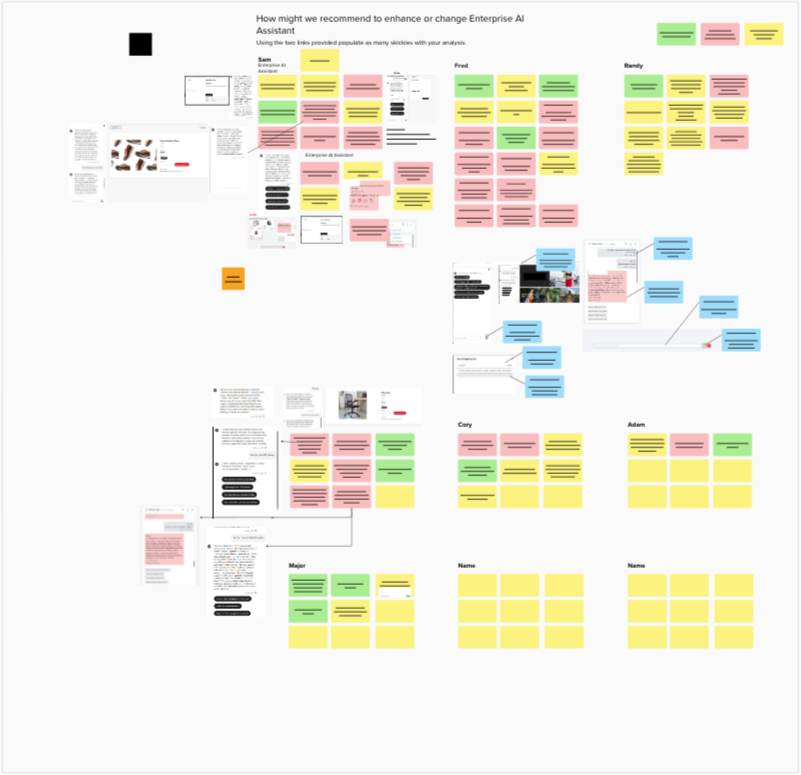
FINDING THE SIGNAL IN THE NOISE.
The team had already done the hard part.
We split up, evaluated the experience independently, and came back with observations. Once we brought everything together, the board filled quickly.
As a Service Designer, this part felt familiar. I knew how to group patterns, cluster findings, and make sense of the signal.
What was new was what happened next.
As I stepped into the Business Analyst role, those findings were no longer ending points. They needed to become roadmap decisions, backlog items, and sprint work.
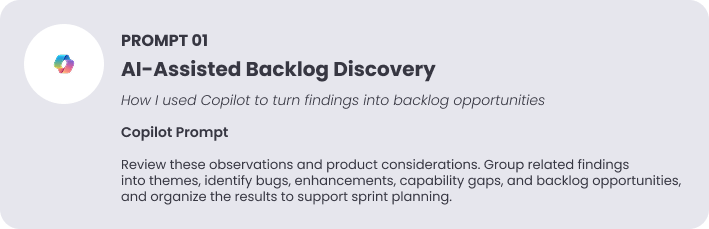
I combined the team's observations with a set of product considerations and brought them into Copilot to help organize the work.
For the first time, I wasn't just synthesizing findings. I was turning them into delivery.
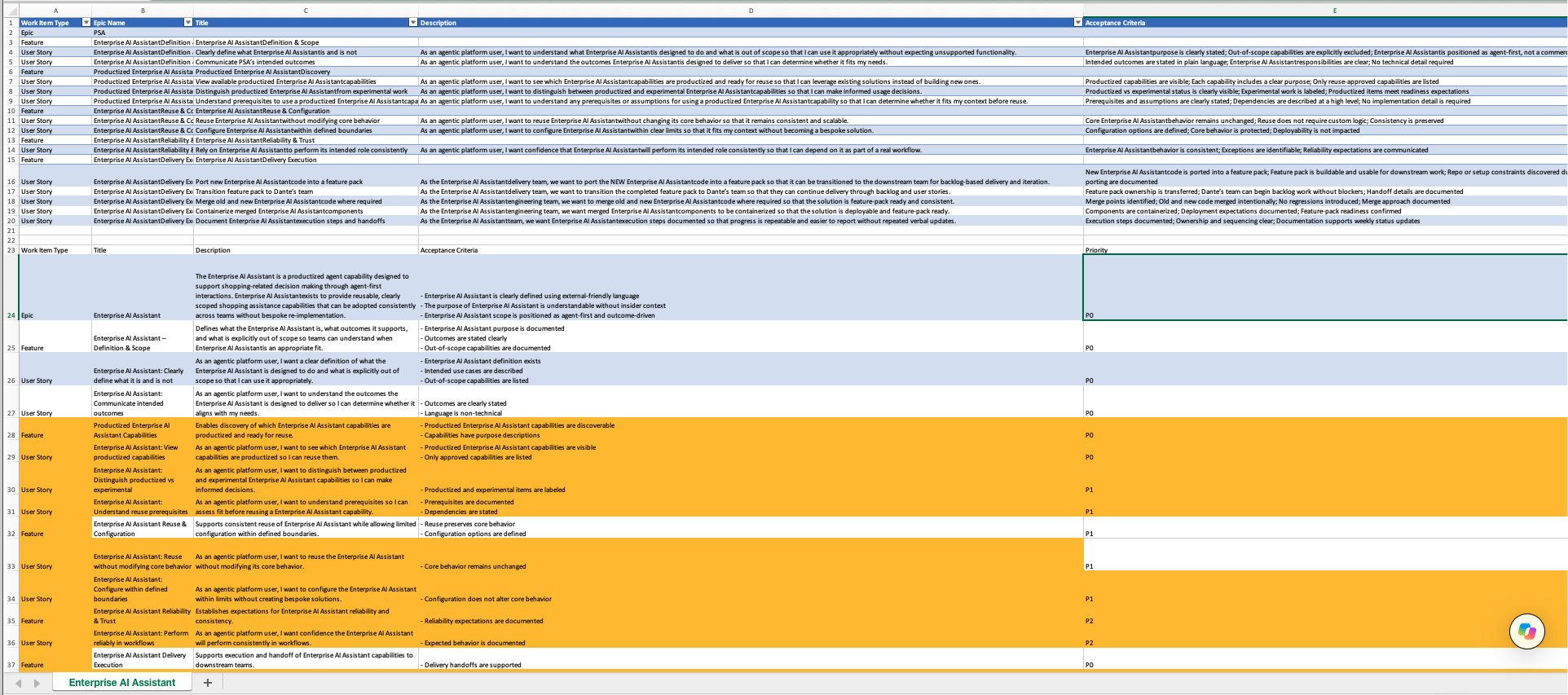
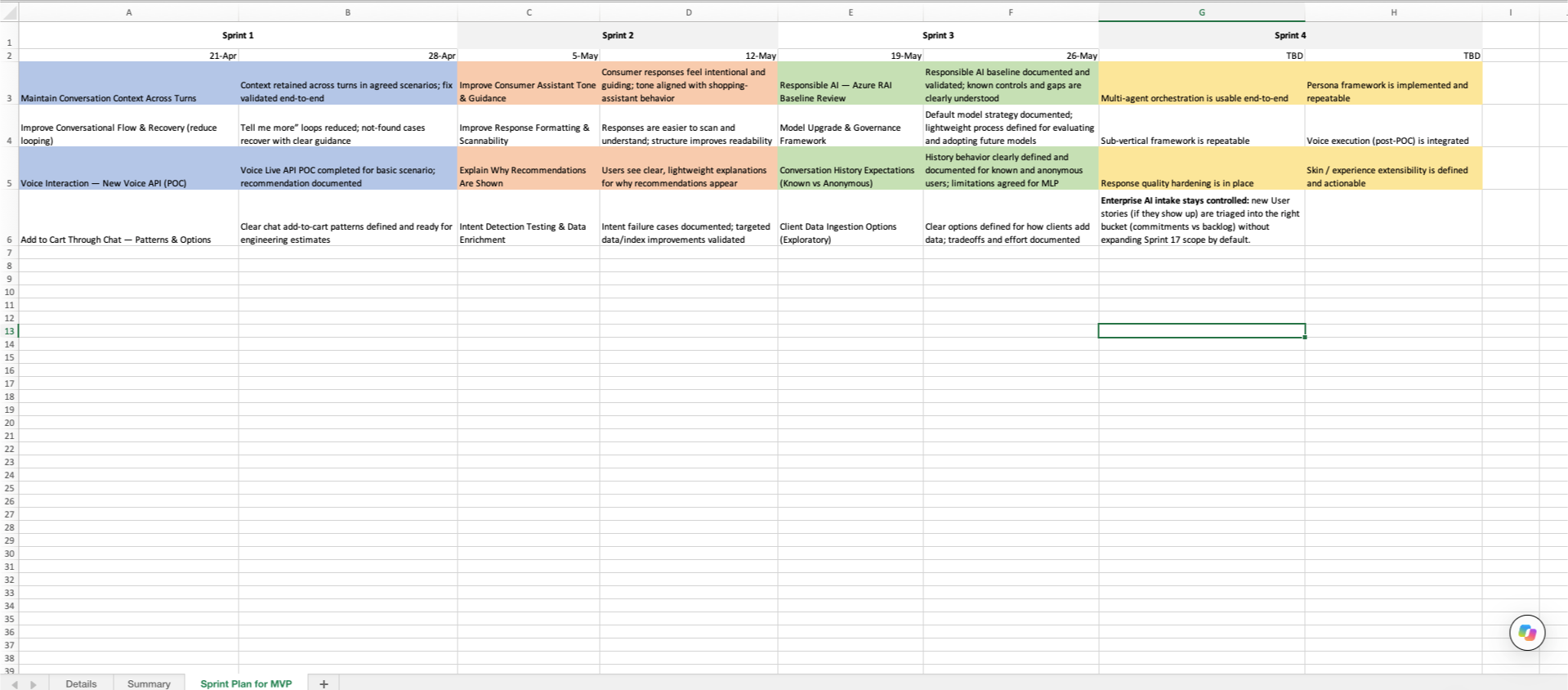
“THE NEXT CHALLENGE WASN'T WRITING STORIES. IT WAS DECIDING WHAT CAME FIRST."
The findings were organized. The themes were emerging.
The next challenge wasn't writing stories. It was deciding what should happen first.
As I stepped further into the Business Analyst role, I was asked to think through priorities. Which capabilities felt foundational? Which opportunities could wait? And what work needed to happen before other work could begin?
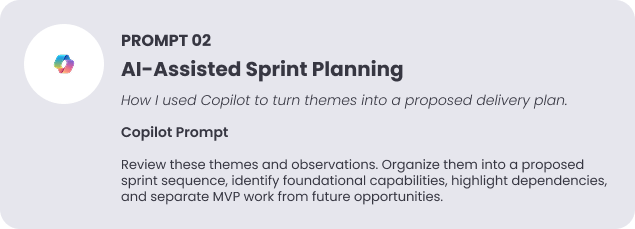
To answer those questions, I used Copilot to organize the themes into a proposed sprint sequence. The result wasn't a roadmap. It was a planning tool that helped explore MVP boundaries, identify dependencies, and create a starting point for prioritization discussions.
Before I could build the backlog, I needed to understand the priorities.
Building a system to listen.
As delivery accelerated, new work continued to emerge during standups, technical reviews, and working sessions.
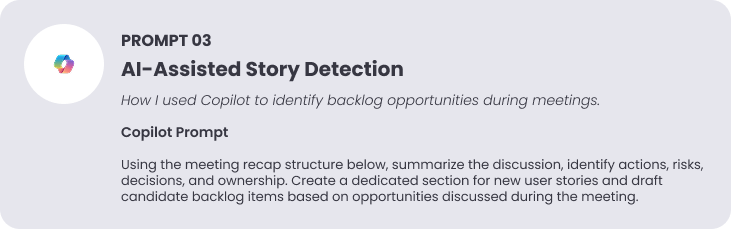
I needed a repeatable way to capture decisions while identifying new opportunities at the same time.
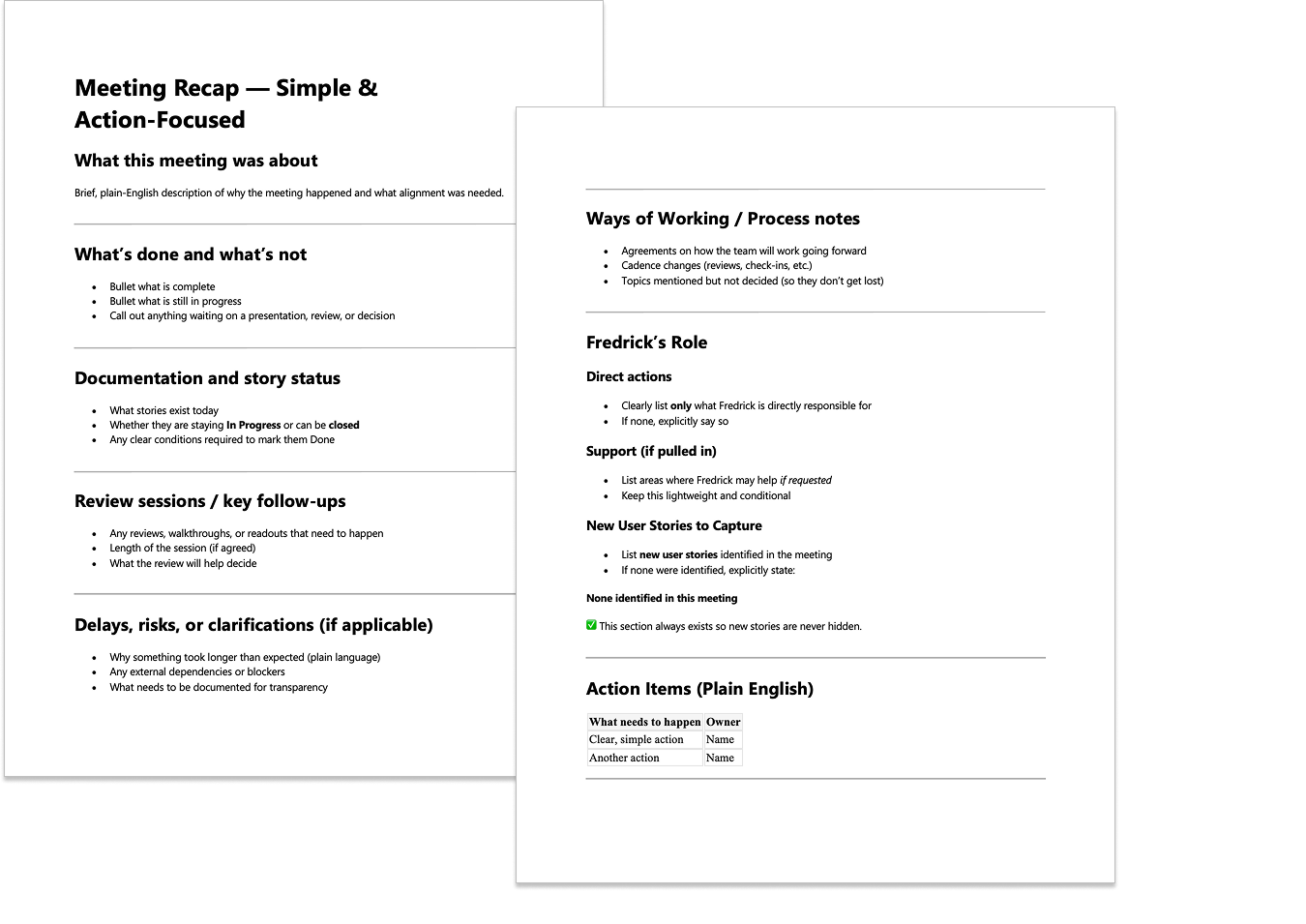
So I built a reusable Copilot-assisted meeting template designed to do both.
I used the template to generate and repost meeting recaps, helping keep multiple workstreams aligned while creating a dedicated space for new user stories.
Whether it was a large cross-functional discussion or a conversation within my own workstream, story opportunities were captured as part of the meeting instead of being reconstructed later. That gave me a starting point for backlog refinement and ADO documentation.
The same process that kept the team aligned also helped me build the backlog.
From conversation to Backlog.
The meeting template helped surface backlog opportunities, but a potential story was only the beginning.
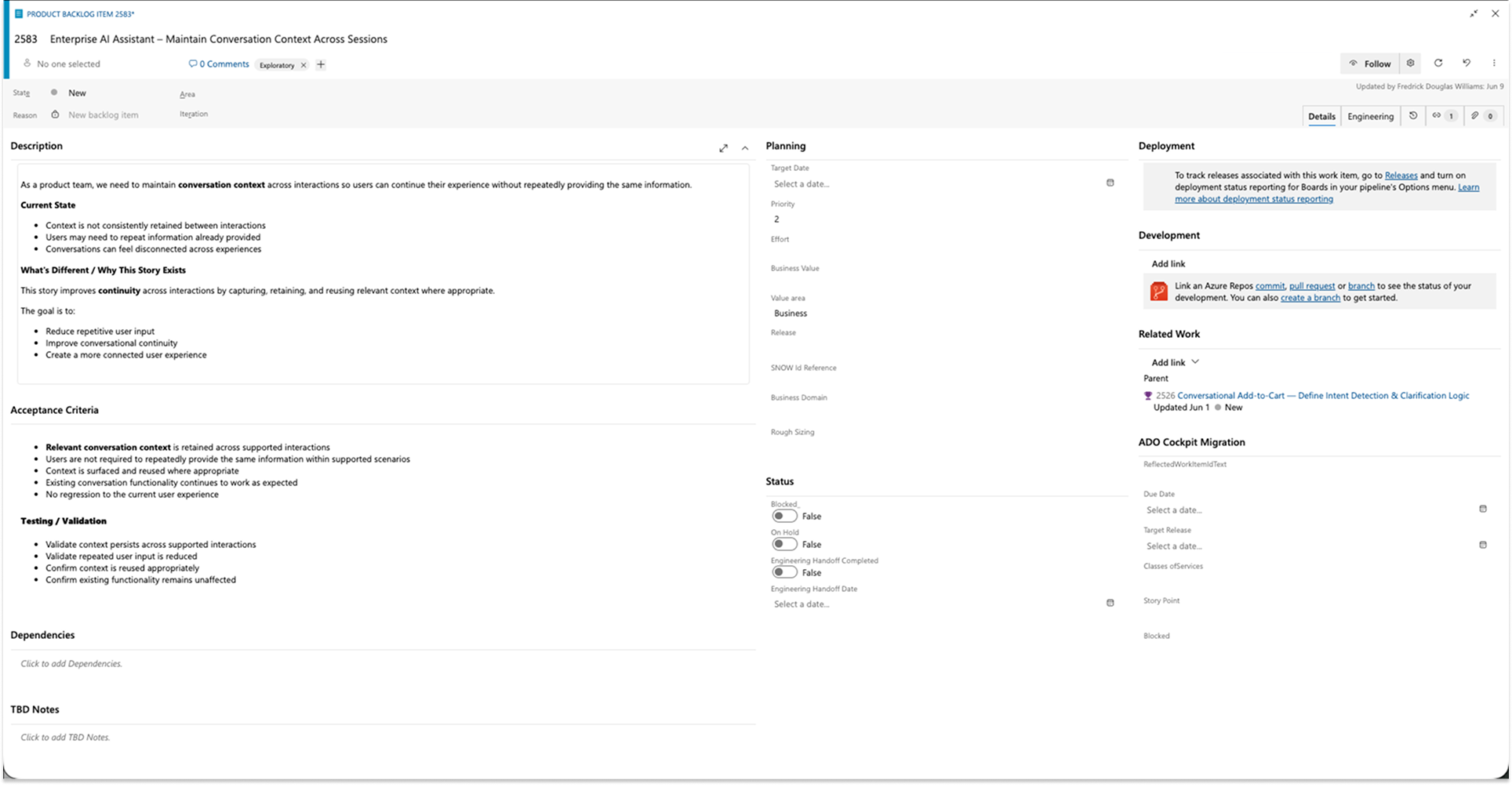
As the Business Analyst for an Enterprise AI Assistant, I was responsible for translating conversations into structured work that engineering could understand, estimate, and deliver.
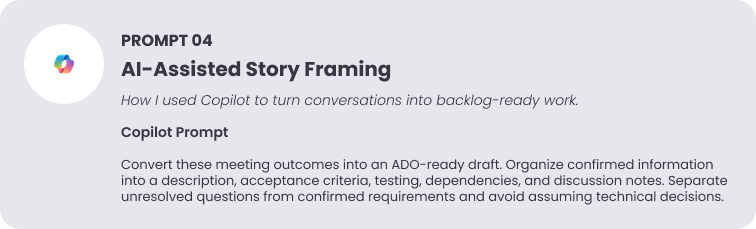
Using Copilot, I transformed technical discussions, product decisions, and backlog candidates into user stories, acceptance criteria, testing expectations, and dependencies. Each story was then reviewed with developers to clarify scope, validate assumptions, and determine what still needed to be built.
I wasn't writing stories about an agentic solution. I was defining the work required to bring it to life.
FROM BACKLOG TO USER EXPERIENCE.
For weeks, the work existed as priorities, sprint plans, user stories, and technical reviews.
Then the product started taking shape.
The stories became capabilities.
The capabilities became interactions.
And somewhere between refinement sessions and release planning...
Enterprise AI opened its eyes.
💬 Hi Fredrick. How can I help today?
What started as research findings, workflow observations, and backlog conversations evolved into an Agentic AI experience designed to help users find information, answer questions, surface recommendations, and complete work through natural language conversation.
For the first time, the work wasn't living in a backlog.
It was living in an interaction.
The backlog I built and refined alongside product owners and developers described the assistant. The experience brought it to life.
Beyond the work.
"You recognized it as an opportunity to build new skills and expand your career possibilities."
— Client Product OwnerThe projects changed, but the challenge remained the same: turning ambiguity into clarity.
DEMO FACTORY.
Designing Reusable Narratives for Agentic Experiences
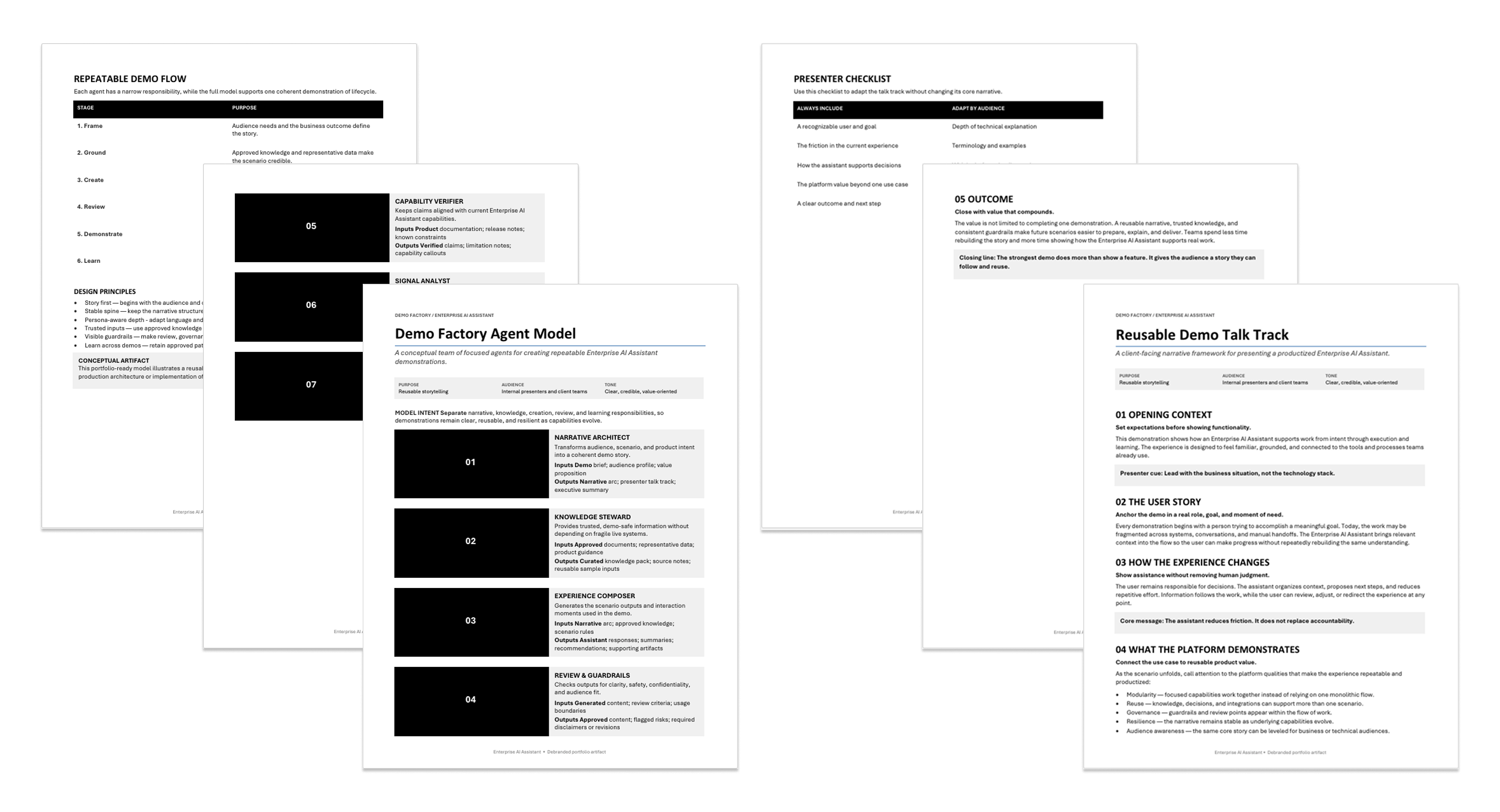
While supporting the development of an Enterprise AI Assistant, I was asked to help define how emerging agentic capabilities would be demonstrated to internal teams and future clients.
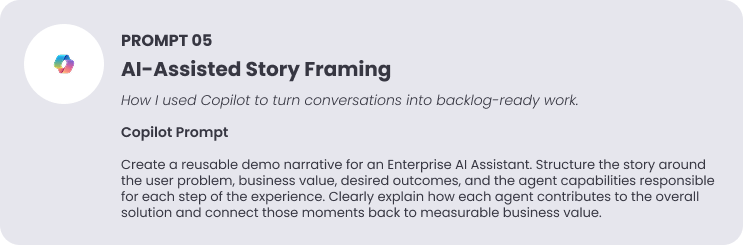
Using Copilot alongside my background in design, storytelling, and user-centered design, I helped shape reusable demo narratives, persona-aware experiences, and presentation guidance designed to create a repeatable way of explaining complex agentic concepts across different audiences and use cases.
The goal wasn't simply to create better demos. It was to create a repeatable way of helping audiences understand complex ideas through stories, structure, and clear communication.
Great technology still needs a story people can follow.

What I learned.
The title changed. The responsibility grew. The goal remained the same: helping people make sense of complexity.
This project began as a service design engagement and became my first sustained experience operating as a Business Analyst.
As a Designer, I was accustomed to working from existing requirements and delivery plans. This time, I found myself on the other side of the process, helping define priorities, structure the backlog, write acceptance criteria, and shape the work before it could be built.
Copilot became an important part of that transition. The more context, structure, and intent I provided, the more valuable the outcome became. It reinforced a lesson that applies to both design and analysis: the quality of the result is often shaped by the quality of the questions being asked.