AEROSPACE CERTIFICATE MANAGEMENT
ROLE UX Designer, Consultant TIMELINE 6 Weeks FOCUS Discovery · Workshops · Wireframing
WHEN REQUIREMENTS DON' T EXIST YET.
Designers usually arrive after the hard questions are answered. The requirements are set, the direction is clear, and the job is to make it real.
This time was different. New client. New industry. A room that went quiet when I expected it to talk. There were no requirements waiting for me, because they didn't exist yet.
So I decided to go find them.

a bet on being wrong.
The client couldn't tell me what they needed yet. So I gave them something to react to instead.
My thinking was simple. People are visual. Put something in front of them that looks real and speaks their language, and they'll respond. And if I got it wrong? Even better. "No" is an answer. "No" moves us forward just as fast as "yes."
I made being wrong the fastest way to get to right.
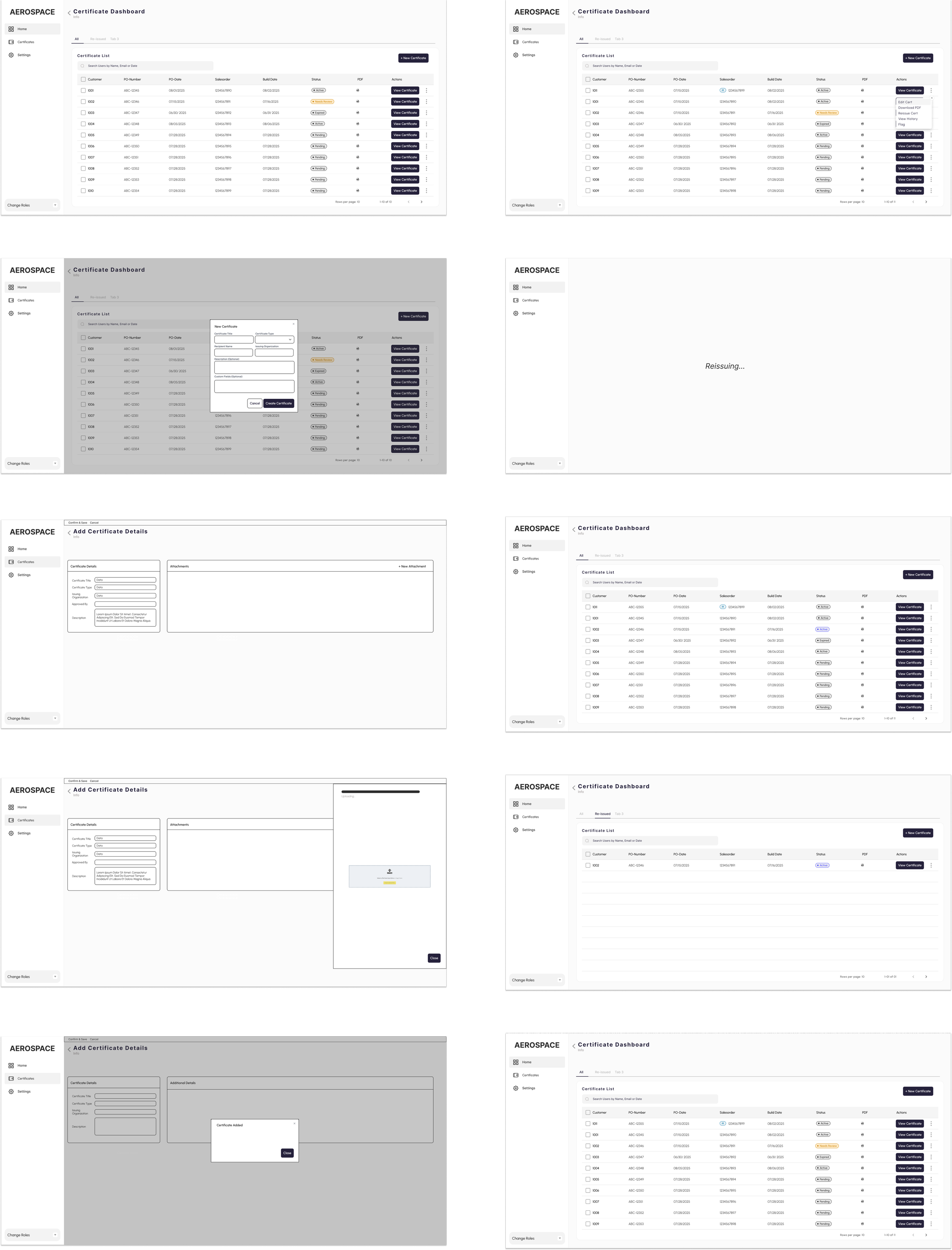
WIREFRAMES AS THE CONVERSATION.
By the second week, we were in back-to-back workshops, and I built my rhythm around them. Bring a wireframe. Watch them react. Refine it that night. Come back sharper the next day.
The requirements were never handed to me. They surfaced, one reaction at a time.
I wasn't going to walk into a workshop empty-handed.
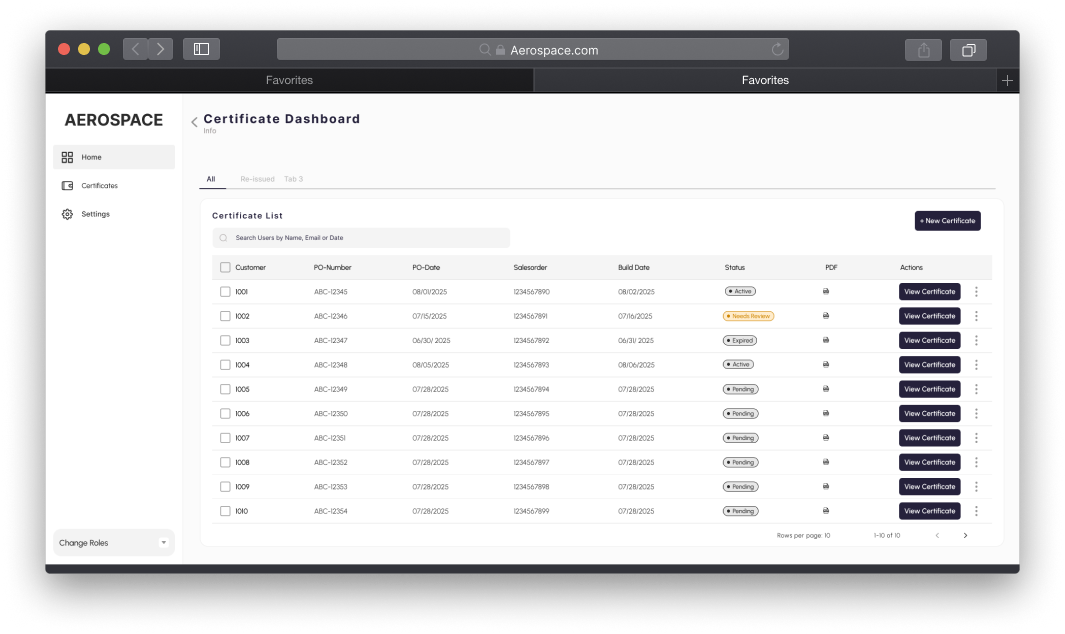
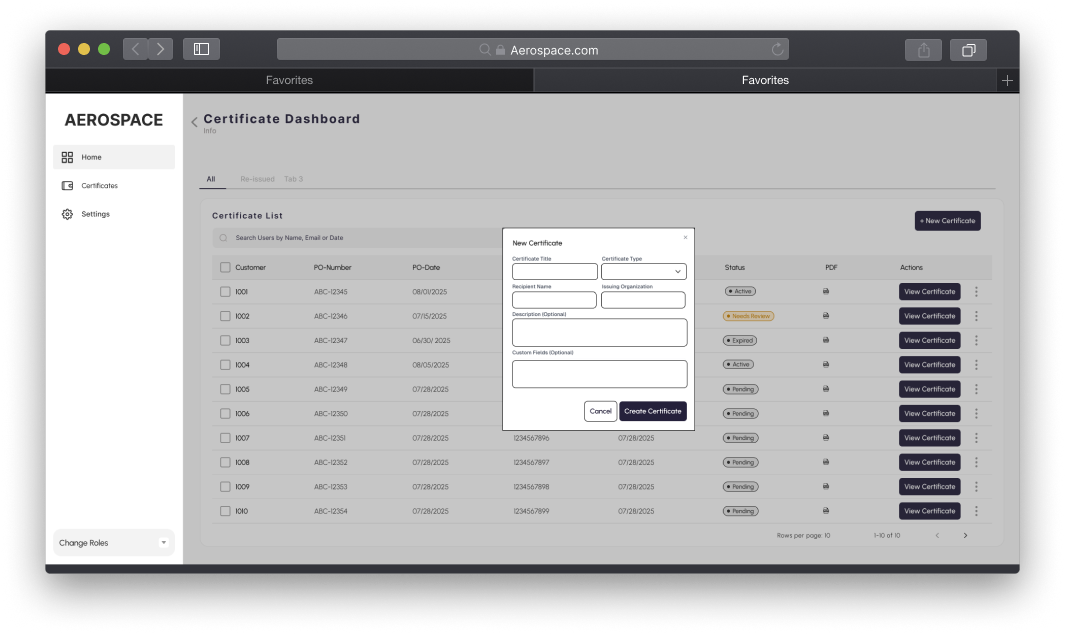
Then it clicked. They thanked me for finally giving them something to work with, and the real information started flowing. Column names. Actual workflows. The certifications they lived with every day.
I wasn't just designing screens. I was pulling the requirements out of the room. And that's when the real challenge showed itself: they weren't managing one certificate at a time. They were managing many, each one dense with detail.
How do you make all of that manageable?
THE LIGHT IN THE ROOM.
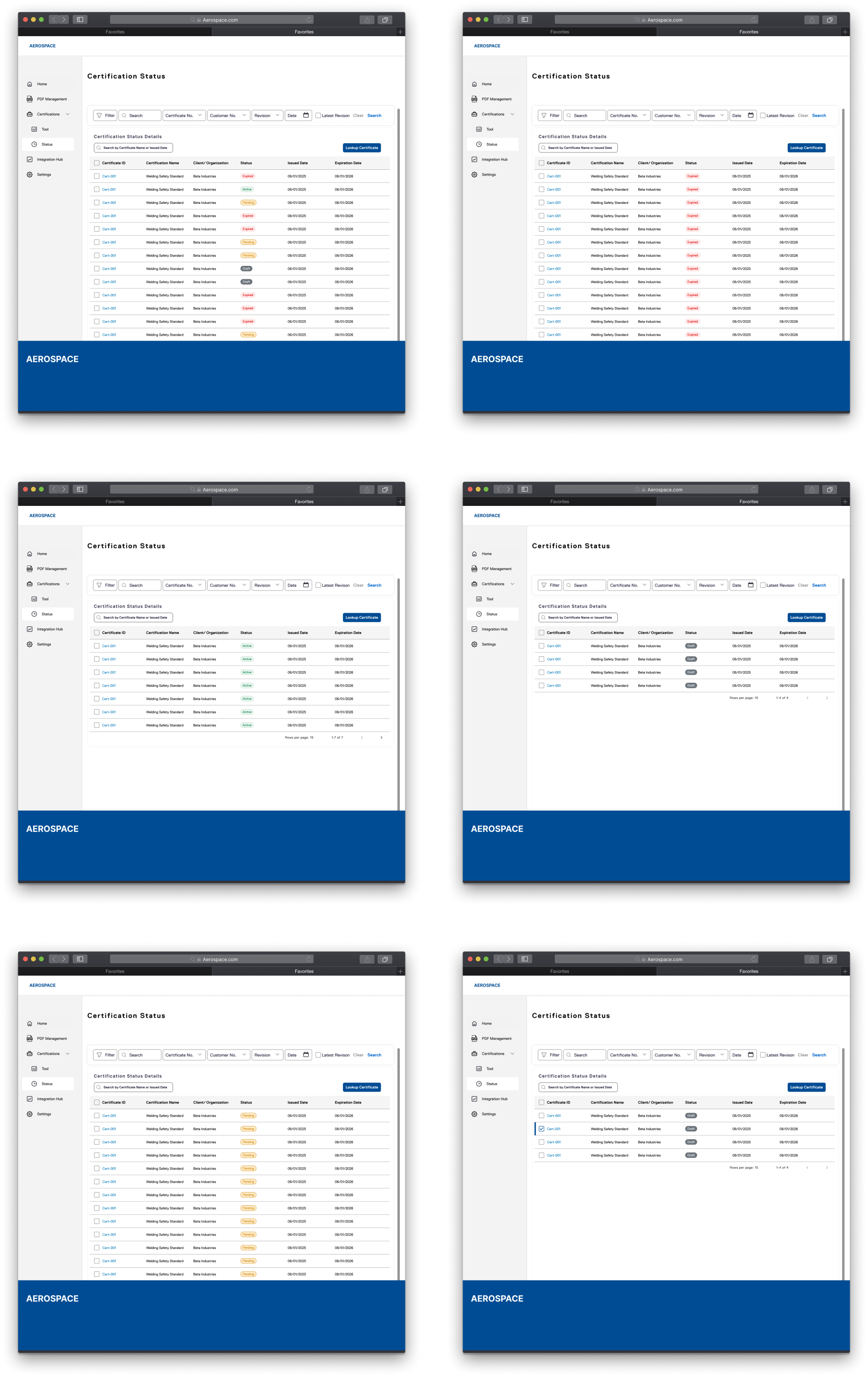
Rasing the Fidelity on Purpose.
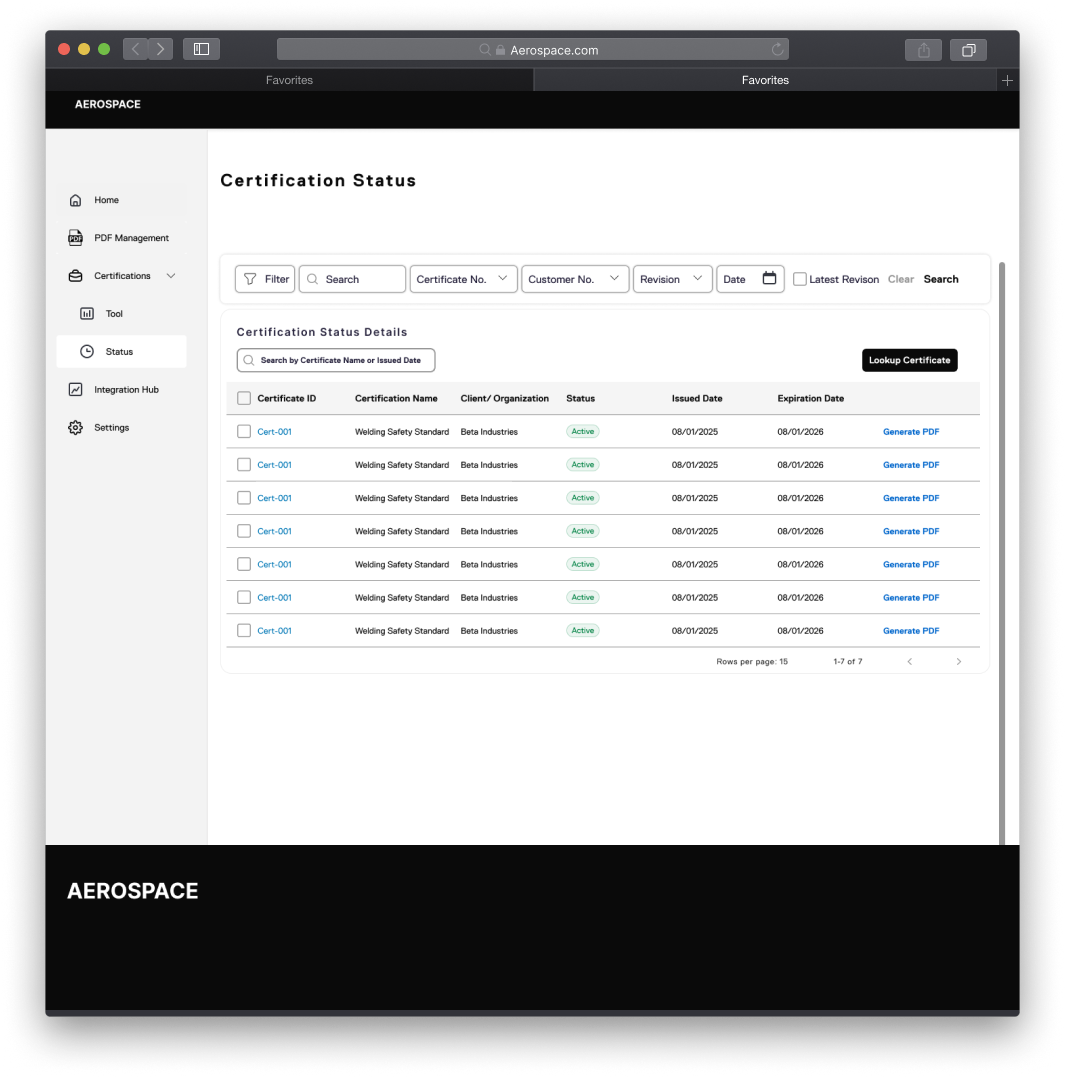
I still didn't know what they'd build on. React, Dynamics, something else. So I let fidelity carry the message.
Each round, as the client got clearer, I made the design sharper. A rough frame became a real screen. A real screen became a working possibility. The point wasn't polish. It was momentum, so they could watch the idea come to life and believe in it.
The clearer they got, the sharper I made it.
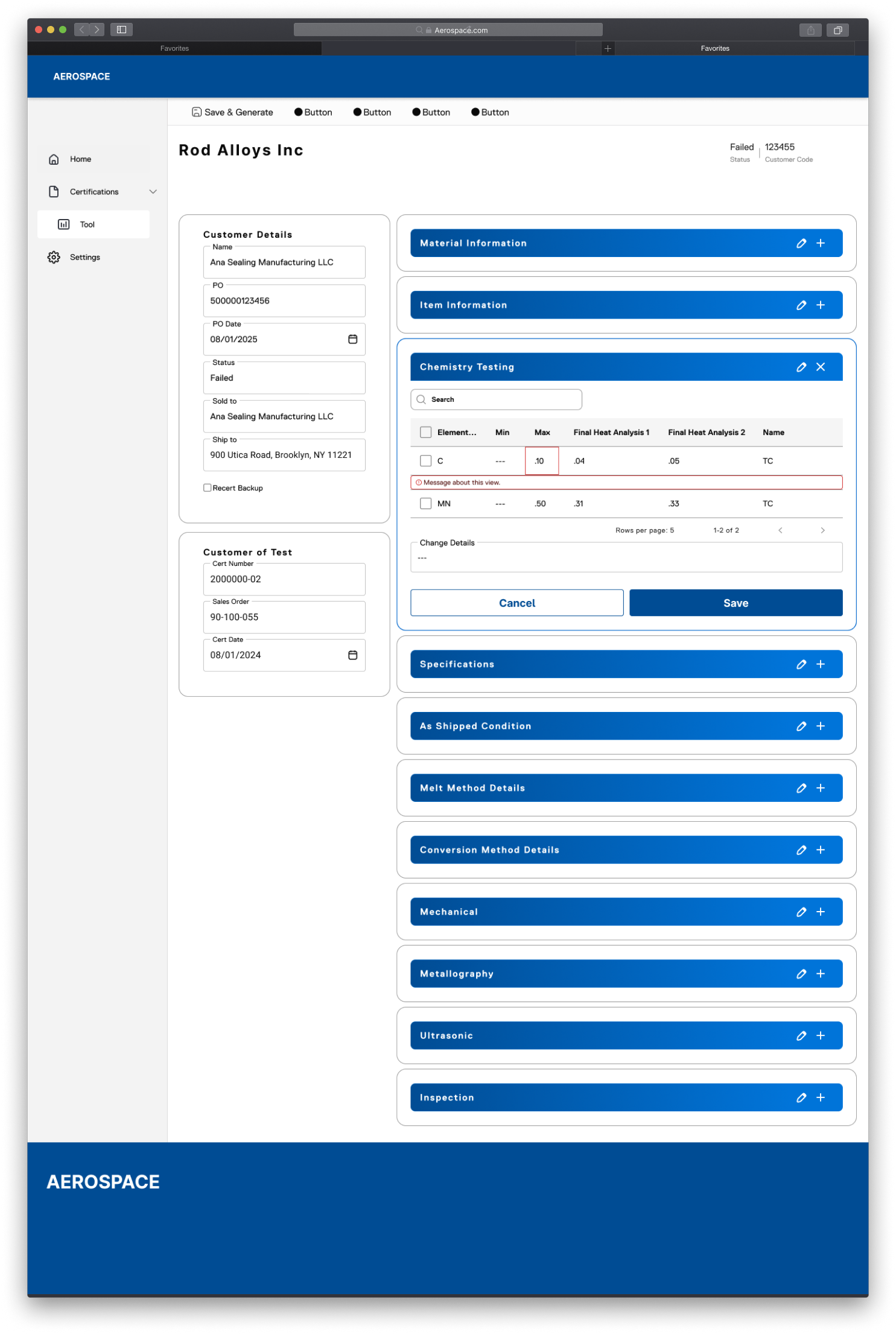
CATCH THE ERROR — Validation flags what's off, like a chemistry result outside the accepted range, so nothing moves forward until it's corrected.
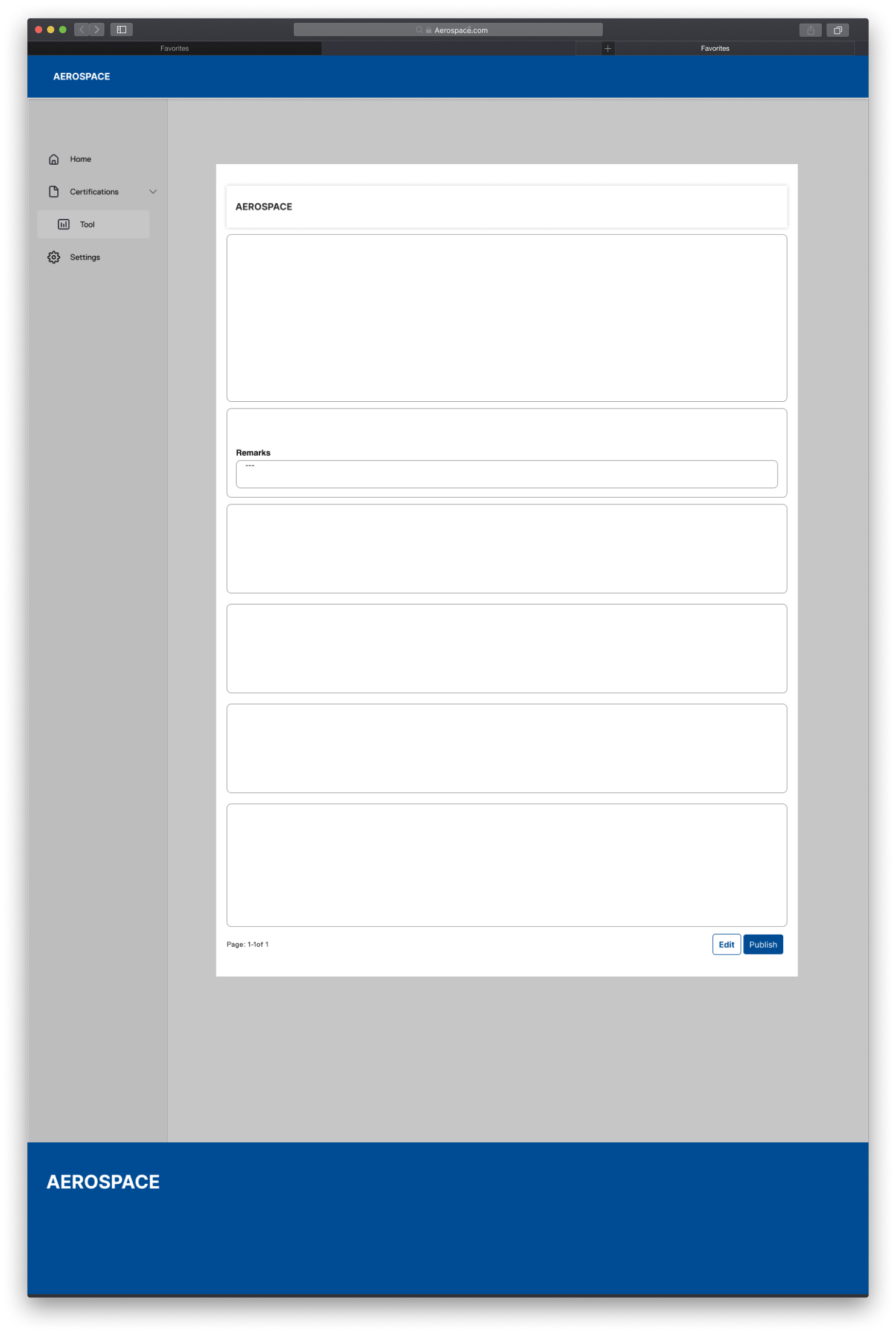
REVIEW & PUBLISH — Once resolved, preview the corrected certificate and publish it, with remarks noting what changed.
Thinking in Containers.
Making it manageable meant rethinking how it was built. Each certificate crammed everything onto one long page. So I took one apart and rebuilt it in containers, grouping what belonged together so any section could be opened, scanned, and edited on its own.
I used Copilot to pressure-test the naming and structure, keeping the client's details private.
The insight was theirs. The structure was mine.
More than a handoff.
"I commend you for figuring out our needs without complete documentation of what those needs were. The way you engage in the workshops and quickly turn around the outcome is worthy. This is a great start."
— Client Product OwnerThe work didn't just fill a gap. It became the place everyone pointed to.
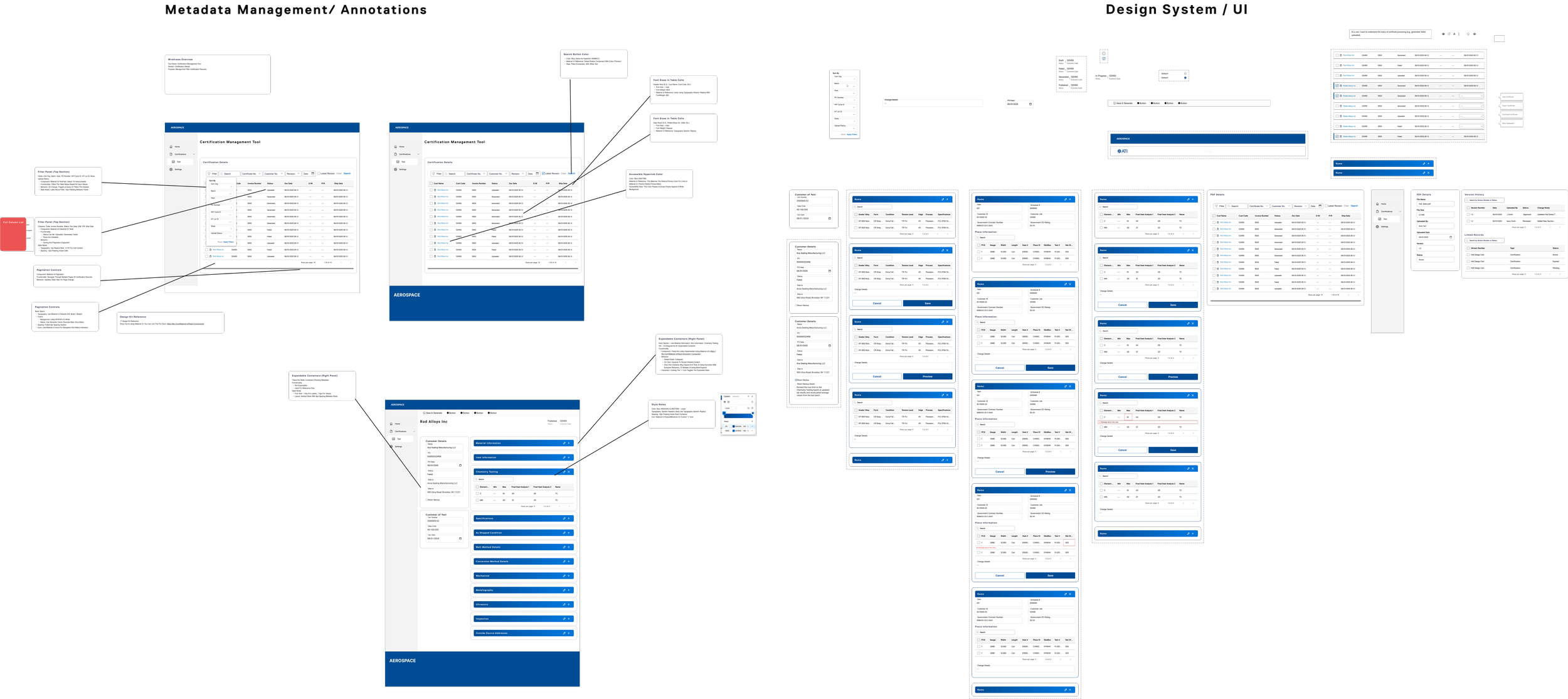

From silence to direction.
This project changed how I work. I came in expecting requirements and found a quiet room. So I stopped waiting for clarity and started building it, using design not as the answer, but as the question that got everyone talking.
I don't see a blank page as a problem. I see it as an opportunity to solve.
When the path isn't clear, design becomes the thing that reveals it.