ENERGY FIELD SERVICE & JOURNEY MAPPING
ROLE UX Designer, Consultant TIMELINE 6 Weeks FOCUS Service Design · Workshops · Journey Mapping · Wireframing
15 Workshops · 3 Roles · 6 Journey Maps
THREE Roles. ONE STORY.
Before there were journey maps, there were conversations.
Three roles experienced the same work in very different ways. My job wasn't to document what they did. It was to understand how those perspectives connected.
Over the course of fifteen workshops, interviews, validation sessions, and stakeholder reviews, those conversations became six journey maps: three current-state experiences and three future-state visions.
But first, I needed to learn how to listen.
The quality of the map depends on the quality of the questions.

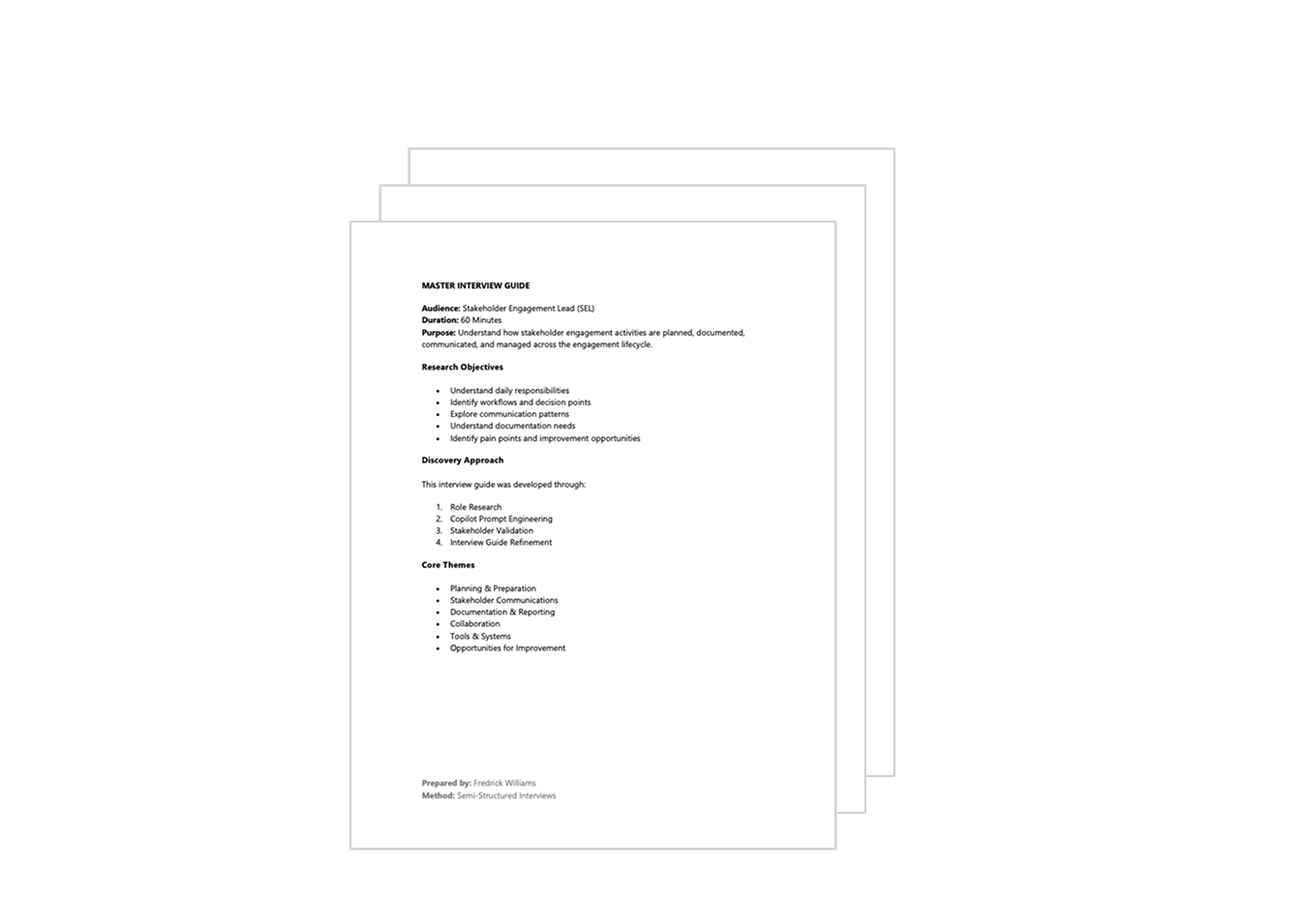
THE interview before the interviews.
BEFORE I COULD MAP A JOURNEY, I NEEDED TO UNDERSTAND THE PEOPLE LIVING IT.
Discovery was already underway when I joined the project, and I wanted to avoid asking stakeholders to repeat information the team already knew.
So before scheduling a workshop, I focused on understanding the role.
I researched the Stakeholder Engagement Lead role by pulling the role description from LinkedIn. I then used Copilot to generate and refine interview questions that reflected how the role actually worked.
Before the workshops began, I met directly with a Stakeholder Engagement Lead to validate those questions, identify gaps, and refine them further. That conversation became the interview before the interviews.
The result was a master interview guide that shaped every workshop and journey map that followed.
Good questions don't happen by accident.

Copilot accelerated the work, but it did not replace the thinking.
I grounded the prompt in role research, used the output to develop a stronger set of questions, and validated those questions with a stakeholder before applying them to workshops and journey mapping.
Research → Synthesis → Validation
from conversations to Journeys.
The pace of the workshops left little time between interviews and synthesis.
After each session, I revisited recordings, transcripts, and my own notes. I then brought the transcripts into the same Copilot thread I had used during preparation, using it as a synthesis partner to identify themes, suggest journey stages, and organize observations into Rose, Bud, Thorn groupings.
I compared those findings against my own observations before translating them into Mural. The board evolved after every conversation, helping me organize insights, identify gaps, and transform interviews into journey maps that informed design decisions, user stories, and future-state recommendations.
The goal wasn't to document conversations. It was to create a shared understanding from them.
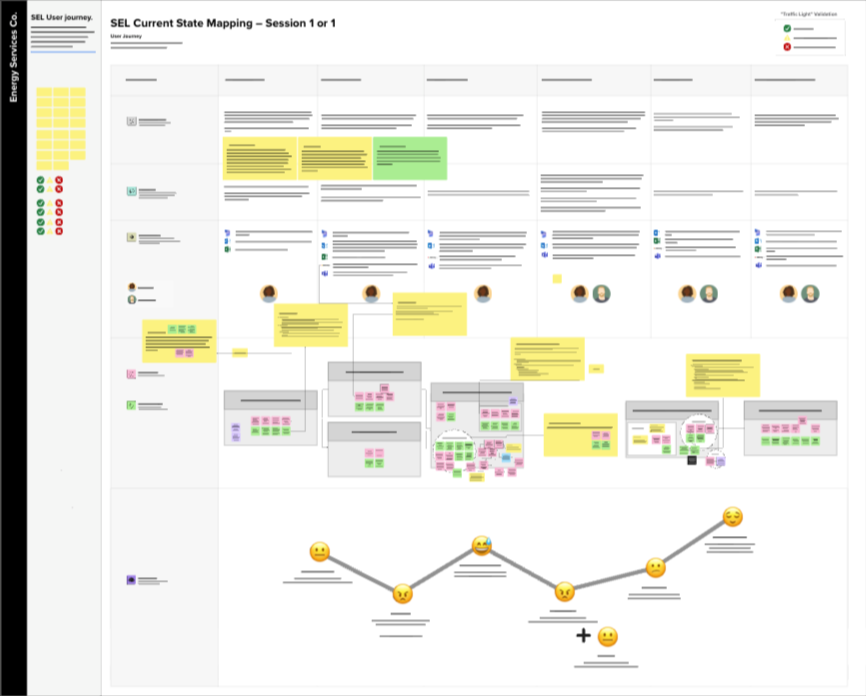
FROM CURRENT STATE TO FUTURE STATE.
The current-state maps revealed recurring friction points, disconnected information, and manual processes across the experience.
With a shared understanding in place, I began identifying where existing Microsoft technologies could support stakeholder needs and reduce friction throughout the journey.
Instead of designing from scratch, I explored how Customer Engagement applications, collaboration tools, and AI-assisted experiences could work together to create a more connected experience across planning, execution, documentation, and reporting.
Understanding the problem made it possible to identify where Dynamics 365, Copilot, and automation could create a better experience.
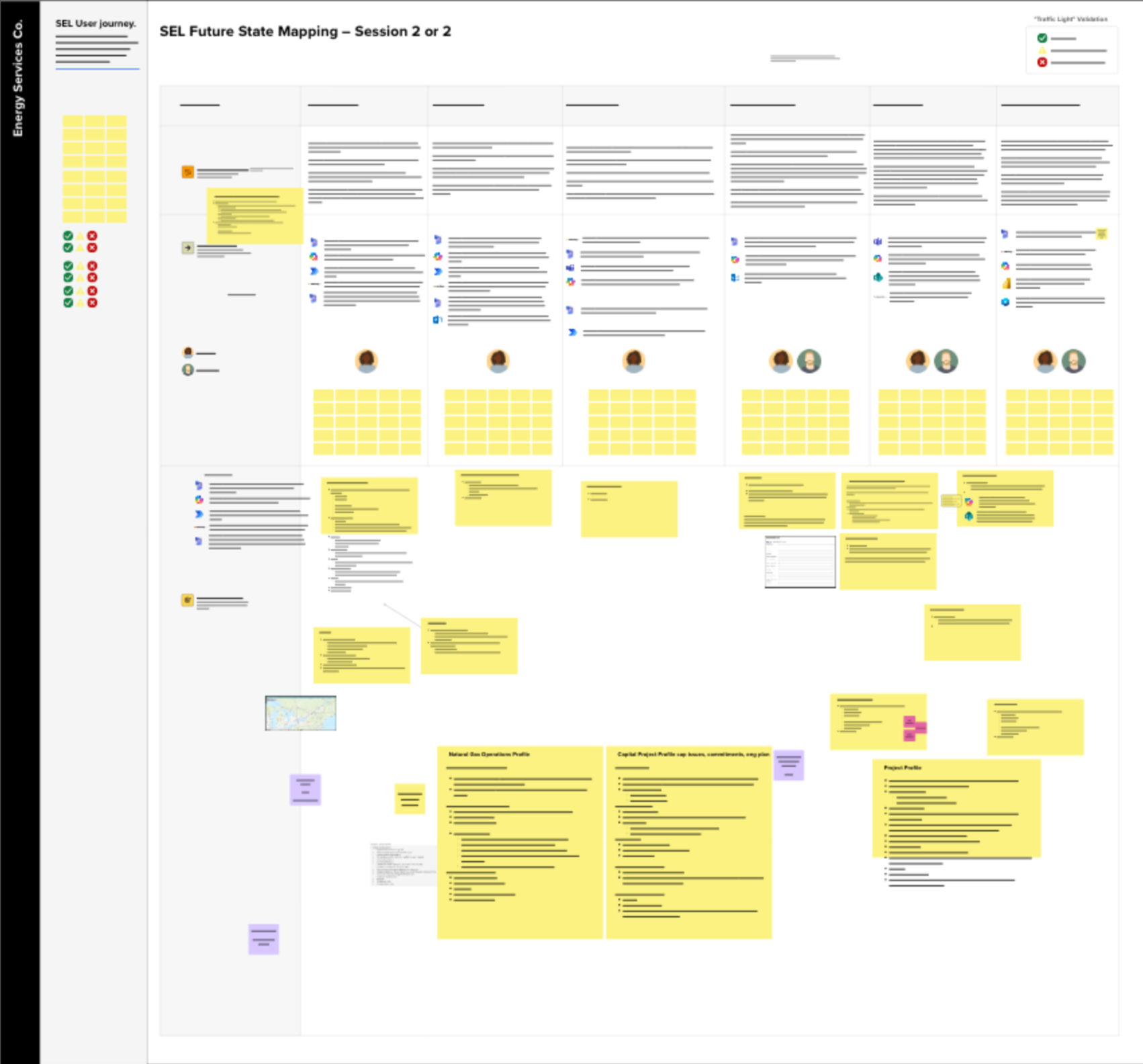
THREE VOICES, ONE EXPERIENCE!
Three roles. Three perspectives. One connected experience.
As interviews, synthesis sessions, and journey maps accumulated, dependencies between roles began to emerge. Understanding those relationships made it possible to identify opportunities that extended beyond a single journey and support the experience as a whole.
Understanding individual journeys made it possible to see the larger system.

Stakeholder Engagement Lead (SEL)
Jordan Chen
Leads engagement planning and stakeholder coordination throughout the process.

Technical Lead
Megan Watson
Supports approvals, compliance activities, and technical readiness.

Community Partnerships Lead (CPL)
Patrick Sanders
Works with municipalities, community stakeholders, and external partners.
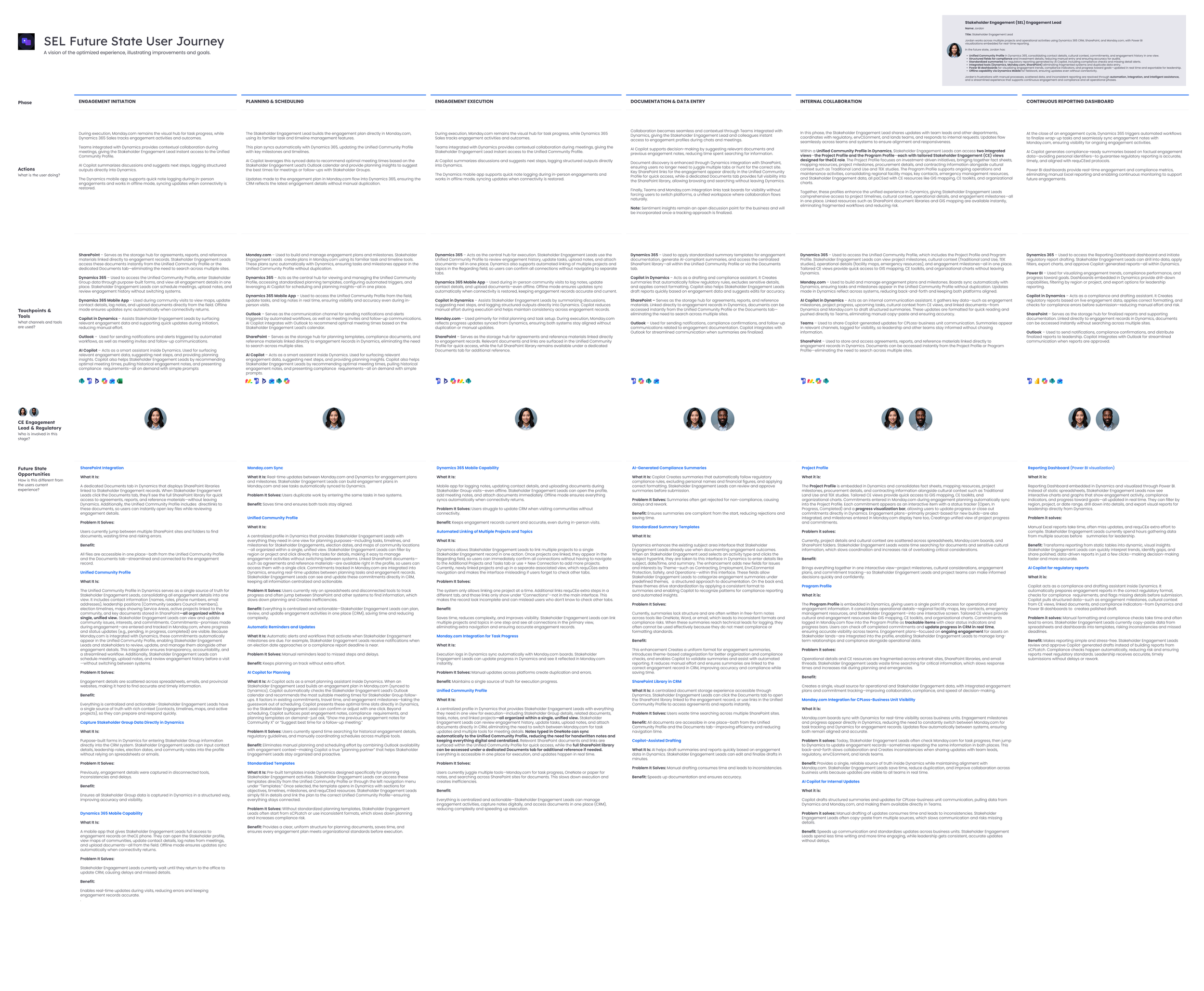
FROM INSIGHT TO IMPLEMENTATION.
The journey maps became more than research artifacts.
The Business Analyst used the findings to develop user stories and requirements. Developers referenced the journeys to better understand workflows, dependencies, and implementation considerations. The UX Lead used the artifacts to communicate findings and future-state recommendations back to stakeholders.
My role wasn't simply to document the experience. It was to translate research into direction the delivery team could act on.
"Throughout the project, we worked closely in defining requirements, client interviews, and collaborating to develop solutions."
The value wasn't in the maps themselves. It was in the direction they created.
— Business Analyst, Energy Services Projectbringing the vision to life.
The future-state journeys created a shared vision for where the experience could go.
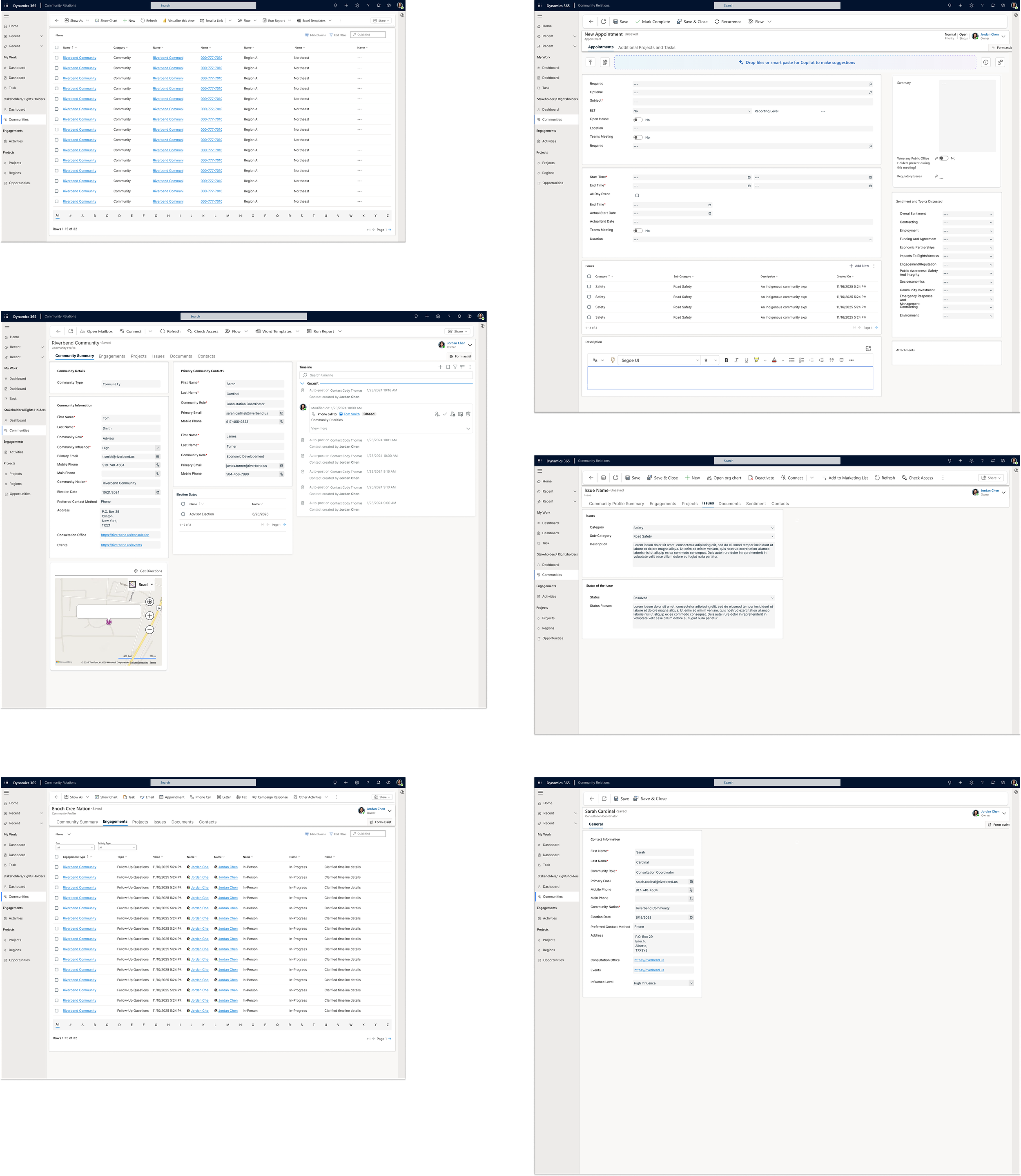
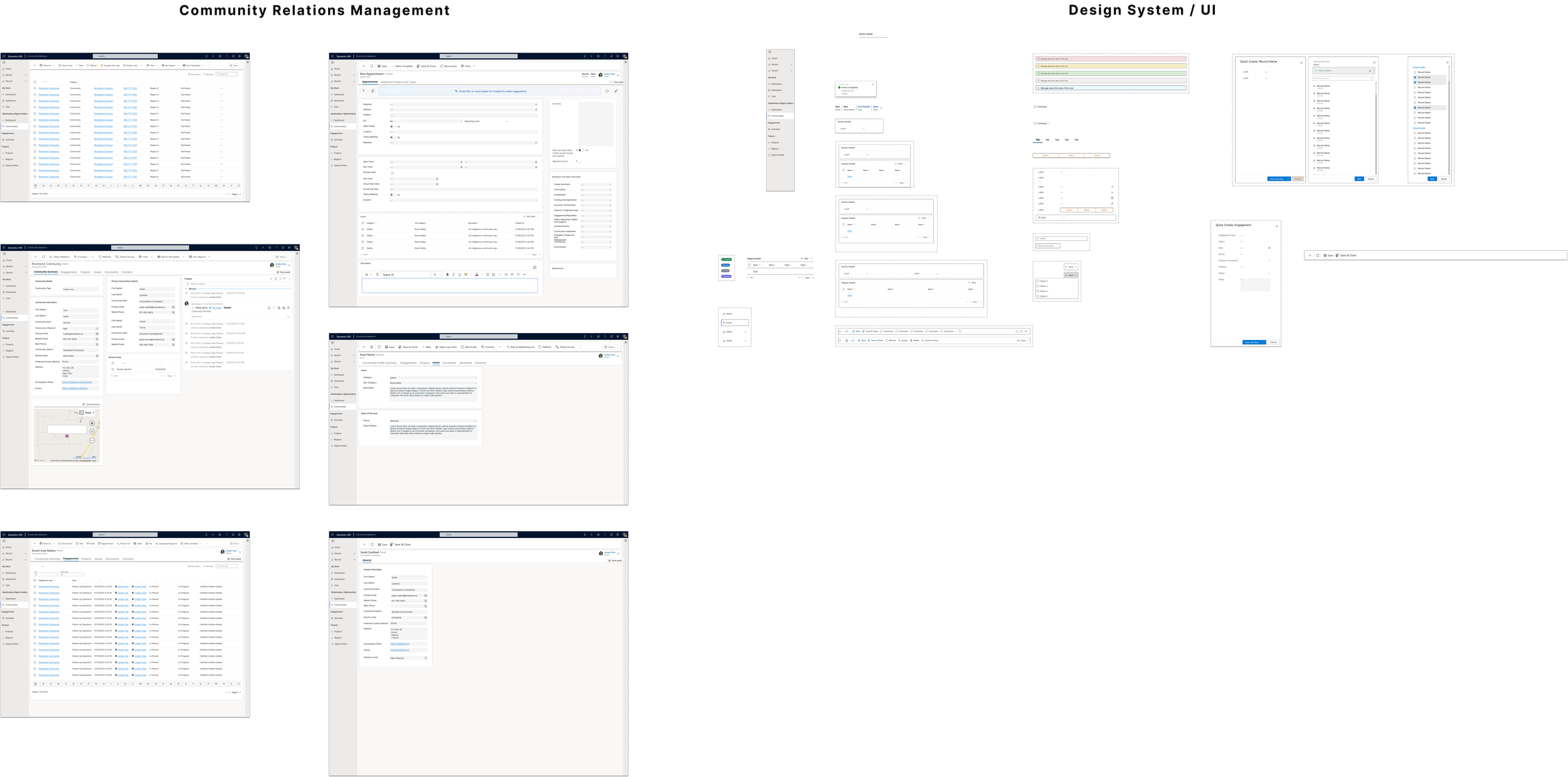
To make that vision tangible, I translated key workflows into concepts that demonstrated how Microsoft technologies, unified experiences, and connected information could support the future state. Using reusable patterns and components, I explored how stakeholder information, engagement activities, documentation, and collaboration could live within a more cohesive experience.
These concepts weren't intended as final designs. They were created to help stakeholders visualize how future-state recommendations could come together within the platform.
The journey maps defined the vision. The concepts made it tangible.
Beyond
The journey
maps.
"He led all workshops end-to-end without the need for guidance or intervention, showing strong confidence, clarity, and presence with client stakeholders."
— Delivery Lead, Energy Services ProjectThe journey maps were the deliverable. The direction they created became the outcome.
This project was my first opportunity to lead journey mapping efforts across multiple roles while carrying the work from interviews through recommendations, concepts, and delivery discussions.
Copilot accelerated preparation and synthesis, but stakeholder conversations, validation, and human judgment remained at the center of the work.
The project reinforced that research alone isn't enough. The real challenge is transforming conversations into something teams can align around and act on
WHAT I LEARNED.
The project strengthened my confidence not as a designer creating artifacts, but as a consultant creating alignment.